
When Your Paid-Off Car Still Carries Collision
You opened your renewal notice last month and saw the same premium you've been paying for years. The car is paid off. You drive to the grocery store, church, and your doctor's office. No commute. No car payment. But the premium hasn't budged, and when you called to ask why, the agent said your coverage is appropriate for the vehicle.
Most retirees in Hialeah carry the same full-coverage structure they held when the car was financed, even after the lien drops and mileage falls below 5,000 miles per year. The carrier has no automatic trigger to review whether collision still earns its cost once you own the vehicle outright. That review falls to you, and it starts with understanding what full coverage actually protects and whether your position still requires it.
Compare rates from carriers that specialize in senior drivers
Mature driver discounts, low-mileage rates, and coverage reviews — see what you're actually eligible for.
Get Your Free QuoteFlorida Minimum Property Damage
$10,000
Florida requires $10,000 property damage liability and $10,000 PIP coverage, but no bodily injury liability for in-state drivers. Collision and comprehensive are optional once the lender releases the lien.
Florida auto insurance state data
What Full Coverage Means After the Lien Drops
Full coverage is not a legal term. It's shorthand for a policy that bundles liability, collision, comprehensive, and often uninsured motorist coverage. When a lender finances your vehicle, the contract requires collision and comprehensive to protect their asset. Once you pay off the loan, that contractual requirement disappears. The coverage remains on your policy because your carrier renewed it automatically, not because Florida law or your financial position requires it.
Collision pays to repair your vehicle after an accident you cause or a single-car incident, minus your deductible. Comprehensive covers theft, vandalism, weather damage, and animal strikes, also minus your deductible. Both coverages protect the vehicle's actual cash value at the time of loss, not the price you paid years ago. If your 2015 sedan is worth $6,000 today and your annual collision premium is $420 with a $1,000 deductible, a total loss pays you $5,000 after the deductible. That's the math retirees in Hialeah need to run before renewal.
Liability coverage does not change when the lien drops. Florida's minimum property damage requirement is $10,000, but many retirees carry higher limits to protect retirement assets in an at-fault accident. That decision is independent of whether you keep collision on a paid-off car. You can drop collision and raise liability limits in the same policy change.
Your carrier will not tell you when collision stops earning its cost on a paid-off vehicle. That review is yours to initiate, and most agents will renew the coverage indefinitely unless you ask to remove it.
The Coverage-Fit Calculation Retirees Run
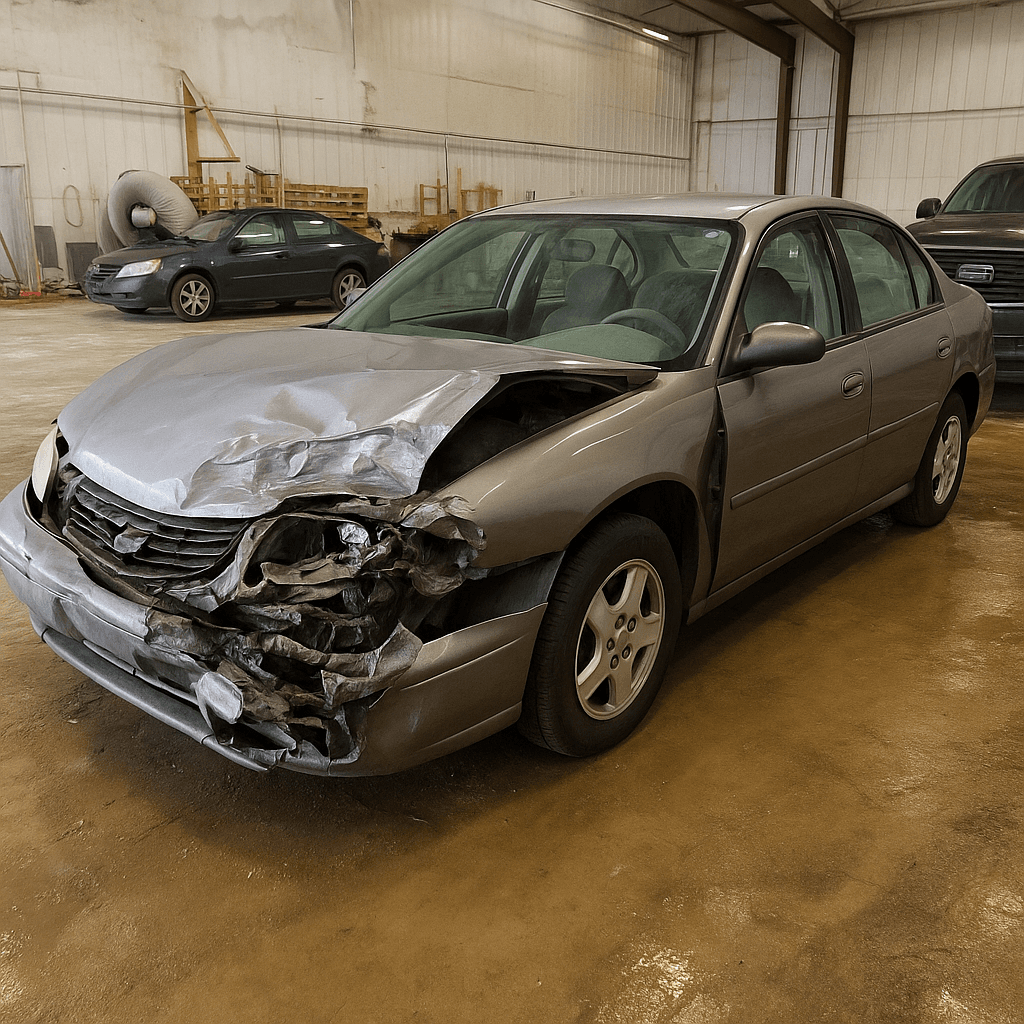
First, determine your vehicle's actual cash value. Use NADA Guides or Kelley Blue Book, not the price you paid or the trade-in estimate a dealer offered three years ago. The actual cash value is what your insurer would pay in a total loss before the deductible. Second, review your current collision premium and deductible on your declarations page. Add twelve months of collision premium to your deductible. If that sum approaches or exceeds the vehicle's actual cash value, collision is paying for itself in two years or less only if you total the car.
Third, assess whether you can absorb the vehicle's replacement cost from savings or income if the car is totaled and collision is not on the policy. Many retirees in Hialeah can cover a $6,000 to $9,000 loss without financing, making collision an expensive hedge against an unlikely event. Fourth, consider your driving exposure. A retiree driving 4,000 miles per year in low-traffic daylight hours faces lower collision risk than a commuter logging 15,000 miles annually in rush-hour traffic. That reduced exposure does not lower your collision premium automatically, but it does change the expected-value calculation for keeping the coverage.
Related Articles




How Medicare and PIP Interact for Florida Retirees
Florida requires $10,000 in Personal Injury Protection coverage on every policy. PIP pays your medical bills and lost wages after an accident regardless of fault, up to the policy limit. Medicare is your primary health insurer once you turn 65, and PIP is secondary. That means Medicare pays first when you're injured in an accident, and PIP covers the gap up to its limit for expenses Medicare does not pay.
Many retirees assume PIP duplicates Medicare and ask to drop it. You cannot. Florida law mandates PIP on every auto policy, and no carrier writing in the state will issue a policy without it. The interaction matters because PIP's lost-wage benefit has no value to a retiree with no wage income, but the medical-expense portion still covers deductibles, copays, and services Medicare excludes.
Medical Payments coverage is optional and pays medical bills for you and your passengers after an accident, regardless of fault, without a deductible. MedPay stacks on top of PIP and Medicare, covering expenses both decline. Some retirees in Hialeah add MedPay at $1,000 or $2,000 limits to close gaps PIP does not reach, particularly for passengers not covered by Medicare. That's a separate decision from the collision question, but both turn on the same principle: does the coverage pay for risks your current position actually faces.
Carriers Writing in Florida
25
Twenty-five carriers write auto insurance in Florida, including non-standard and preferred-tier insurers. Geico, Progressive, State Farm, Allstate, and Nationwide write standard and FR-44 policies. Acceptance, Dairyland, and Infinity specialize in non-standard coverage for seniors comparing after a rate increase.
Auto insurance carriers by state data
Carriers That Handle Retiree Profiles in Hialeah
Geico, Progressive, and State Farm write preferred and standard-tier policies in Florida and offer online quoting for retirees comparing coverage structures. All three are required by Florida Statute 627.0652 to offer a mature-driver discount for operators 55 and older, though the statute does not fix the percentage—each carrier sets the amount in its filed rates. You verify the discount at quote time, not by calling the 800 number.
Acceptance Insurance and Dairyland write non-standard policies and handle drivers comparing after a premium increase or a lapse. Both offer online quotes in Florida and write policies with liability-only, state-minimum, and full-coverage structures. If your current carrier raised your premium at renewal and you want to compare against a non-standard specialist, both are accessible without a broker.
Allstate and Nationwide write standard-tier policies and allow online quoting for Florida retirees. Neither publishes carrier-specific discount percentages, and Florida law does not require them to. The mature-driver discount amount is verified when you request a quote with your birthdate and coverage selections entered. Comparing carriers means comparing program structure and eligibility, not inventing rate differences you cannot verify before quoting.
Low-Mileage and Usage-Based Programs for Retirees
Progressive offers Snapshot, a usage-based program that tracks mileage, braking, and time-of-day driving through a mobile app or plug-in device. Retirees driving under 7,500 miles per year in low-risk hours often see a discount at renewal based on actual driving data, not estimated annual mileage. The program requires enrollment and a monitoring period before the discount applies.
Geico and Nationwide offer low-mileage discounts for drivers reporting annual mileage below a carrier-defined threshold, typically 7,500 or 10,000 miles. The discount is applied at quote time when you provide an odometer reading or mileage estimate, and the carrier may verify mileage at renewal with a photo submission or inspection. Retirees who no longer commute but never updated their mileage estimate with their current carrier often qualify immediately once they request the review.
What You Do Before Your Next Renewal
Pull your current declarations page and write down three numbers: your vehicle's actual cash value from NADA or Kelley Blue Book, your annual collision premium, and your collision deductible. Add the premium and deductible. If the sum is more than half the vehicle's value, request quotes from two carriers writing in Florida—one standard-tier, one non-standard—with collision removed and liability limits that protect your retirement assets. Compare the premium difference and decide whether collision still earns its cost for your driving exposure and financial position. If you keep collision, confirm your carrier applied the mature-driver discount Florida law requires them to offer, and ask whether a defensive driving course would increase it.