
When the Lender Requirement Disappears
You made the final payment, received the title, and own the car outright. The lender requirement for collision and comprehensive coverage disappeared the day the loan closed. Your agent never called to discuss whether you still need it, and your renewal notice arrived with the same premium you paid last year. You drive 6,000 miles annually now, the car sits in your garage most days, and you're questioning whether full coverage still makes sense.
This article addresses the coverage-fit decision retirees face when the lender no longer dictates the answer. Florida's liability structure, the vehicle's current market value, your retirement assets, and your actual mileage all matter here. Generic full-coverage guidance written for commuters paying off a financed vehicle misses the position you're in now.
Compare rates from carriers that specialize in senior drivers
Mature driver discounts, low-mileage rates, and coverage reviews — see what you're actually eligible for.
Get Your Free QuoteFlorida Property Damage Minimum
$10,000
Florida requires $10,000 property damage liability and $10,000 personal injury protection, but does not mandate bodily injury coverage for in-state drivers. That minimum matters less than your liability exposure: retirement assets are visible to opposing counsel after an at-fault accident.
Florida auto_insurance_state_data, PIP and property damage requirements
Florida's Liability Structure Shapes the Question
Florida does not require bodily injury liability for in-state drivers. The state minimum is $10,000 property damage and $10,000 personal injury protection. That structure leaves retirees exposed: if you cause an accident injuring another driver, your retirement assets are reachable in a lawsuit even when you carry the state minimum.
Liability limits matter more than collision coverage once the car is paid off. Most retirees carry $100,000/$300,000 bodily injury or higher to protect home equity, retirement accounts, and other assets. That decision is independent of whether you keep collision and comprehensive on the vehicle itself.
The full-coverage question splits into two decisions for retirees: liability limits protecting your assets, and physical-damage coverage protecting the car. The first is about exposure; the second is about the vehicle's value and your risk tolerance.
The vehicle's current market value, not its purchase price or sentimental value, determines whether collision coverage earns its cost. Most carriers will not pay more than actual cash value at total-loss time.
The Vehicle-Value Threshold for Collision Coverage
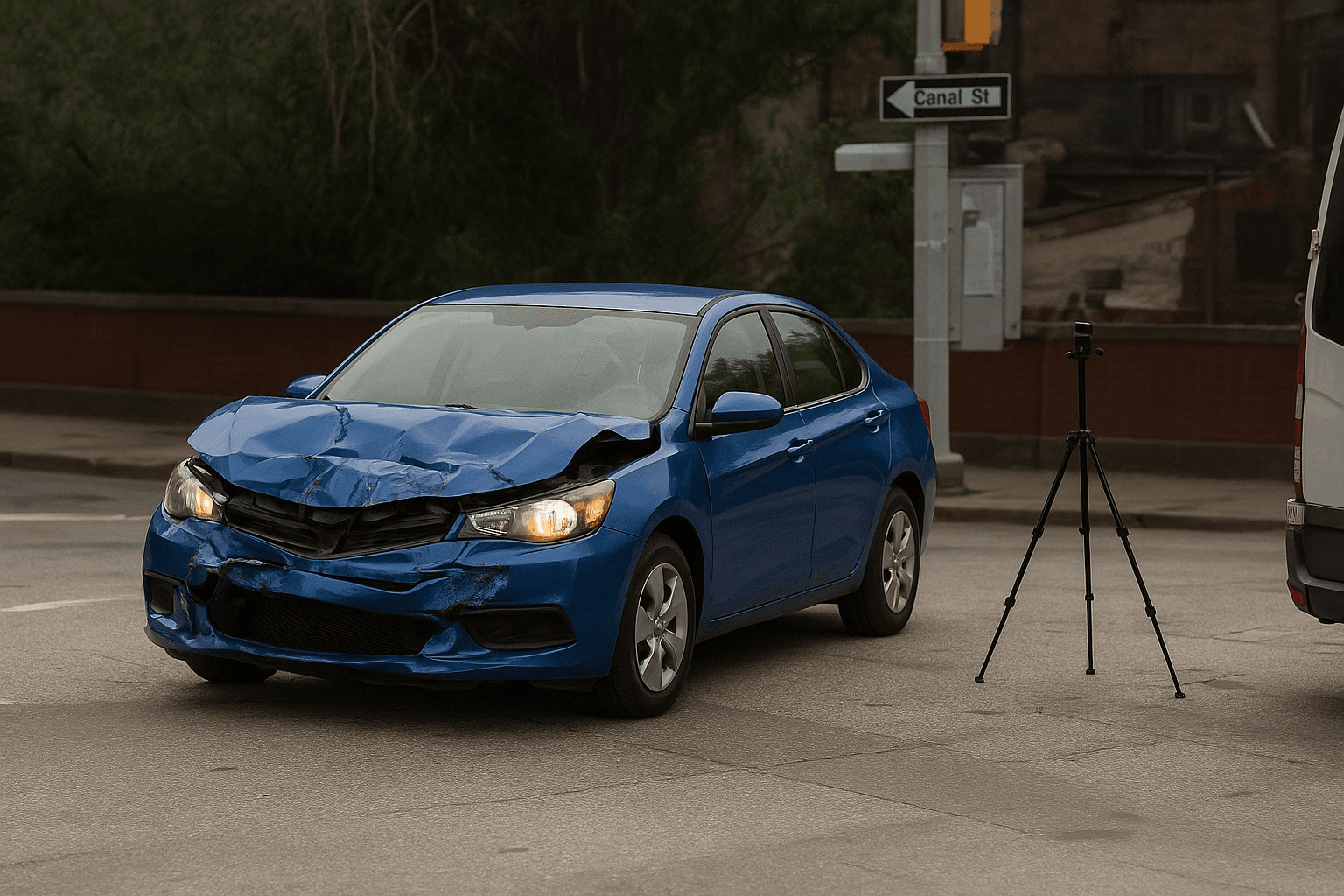
The conventional rule of thumb: if annual collision and comprehensive premiums exceed 10 percent of the vehicle's current market value, you're paying more for the coverage than you're likely to recover. A car worth $8,000 with $900 annual physical-damage premiums crosses that line. The deductible reduces recovery further: a $1,000 collision deductible on an $8,000 car means maximum recovery is $7,000, and you've paid $900 for that protection.
Check your vehicle's actual cash value using Kelley Blue Book or NADA Guides, not the price you paid years ago. Then compare that figure to your current collision and comprehensive premium, including the deductible. If the math shows you're paying a meaningful percentage of the car's value annually, dropping physical-damage coverage and self-insuring becomes a legitimate judgment call for a retiree on a fixed income.
Related Articles


Mileage and Garage Storage Shift the Risk Profile
You no longer commute. Your annual mileage dropped from 12,000 or 15,000 miles to 6,000 or fewer. The car sits in your garage most days, driven for errands, medical appointments, and occasional trips. Lower mileage reduces collision risk materially, but your premium may not reflect that unless you enrolled in a low-mileage or usage-based program.
Florida law requires insurers to offer a mature-driver discount under Fla. Stat. §627.0652, but the statute does not fix the discount amount: each carrier sets its own percentage. Low-mileage and usage-based programs stack on top of that discount for retirees who drive infrequently. State Farm, Progressive, Geico, and Nationwide all write in Florida and offer mileage-tracking or telematics programs; ask each carrier which programs apply to your profile and how enrollment affects both liability and physical-damage premiums.
Comprehensive coverage protects against theft, vandalism, weather damage, and animal strikes. A garaged vehicle in Port St. Lucie faces lower theft risk than a car parked on the street nightly, but Florida's hurricane exposure and wildlife make comprehensive a different calculation than collision. Some retirees drop collision but keep comprehensive when the vehicle's value falls below the collision threshold but remains exposed to storm or animal damage.
Carriers Writing in Florida
25
At least 25 carriers write auto insurance in Florida. State Farm, Progressive, Geico, Allstate, Nationwide, and USAA all offer online quotes and mature-driver discount programs. Compare how each structures physical-damage coverage for retirees with paid-off, moderate-value vehicles.
Florida auto_insurance_carriers_by_state carrier count
Medical Payments and PIP Interact with Medicare
Florida requires $10,000 personal injury protection, which covers your medical expenses after an accident regardless of fault. Medicare beneficiaries often question whether PIP duplicates Medicare coverage. It does not: PIP is primary after an auto accident, and Medicare becomes secondary. That means PIP pays first up to its $10,000 limit, then Medicare covers remaining eligible expenses.
Medical payments coverage, an optional add-on, works the same way: it pays before Medicare. Some retirees drop medical payments on the theory that Medicare already covers them, but that ignores the coordination-of-benefits rule. If you're injured as a passenger in someone else's vehicle, or if your PIP limit exhausts quickly in a serious accident, medical payments coverage closes the gap before Medicare picks up the remainder. The cost is typically modest for retirees; verify with your carrier what the annual premium adds and decide whether that gap protection justifies it.
The Comparison Step Retirees Skip
Most retirees renew with the same carrier year after year, never shopping the coverage structure or asking whether another carrier treats their profile more favorably. Paid-off vehicle ownership, reduced mileage, and a clean record give you leverage in the comparison process: you're exactly the risk profile preferred carriers want.
State Farm, Geico, Progressive, Allstate, and Nationwide all write in Florida and offer mature-driver discounts, low-mileage programs, and online quoting. Request quotes with and without collision coverage, and compare how each structures the liability limits relative to physical-damage premiums. The carrier whose renewal you just received may no longer offer the best structure for your current position. Comparison does not require switching; it confirms whether your current carrier still fits or whether another handles retirees with paid-off cars more favorably.
Ask each carrier how the mature-driver discount applies, what documentation the defensive driving course requires, and whether low-mileage or usage-based enrollment stacks on top of the age-based discount. Florida mandates the mature-driver discount by statute, but carriers set the amount individually. You're verifying structure and eligibility, not chasing an invented savings percentage.
Name the Coverage Path That Matches Your Position
Pull your current policy declarations page and identify your vehicle's actual cash value, your current collision and comprehensive premiums, and your deductible. Compare the annual physical-damage premium to the vehicle's market value using the 10 percent threshold as a starting reference point. If the math shows you're paying a meaningful percentage of the car's value annually, request quotes without collision coverage and see how the total premium changes. You're not locked into that decision until you accept the new policy terms.
Request quotes from at least three carriers that write in Florida and offer mature-driver programs: State Farm, Progressive, and Geico are all accessible online. Compare liability limits first, then physical-damage options, then how each applies the mature-driver and low-mileage discounts. The goal is confirming whether your current structure still fits your paid-off, lightly driven position, or whether another carrier offers a better match. Start the comparison process now while you still have time before your next renewal.