The Payoff Changed the Math
You made the final car payment two or three years ago. The lender no longer requires collision and comprehensive coverage. Your carrier renewed the policy with identical coverage at the same or higher premium, and you approved it without much thought because that is what renewal notices do: they ask for consent, not for reconsideration. Now someone has asked whether you need full coverage on a nine-year-old sedan driven 4,000 miles a year, and the question sits unresolved because no single source explains how to decide.
Florida law requires $10,000 property damage liability and $10,000 personal injury protection for any registered vehicle. Collision and comprehensive coverage protect your car, not the other person's, and once the loan is satisfied the state does not mandate them. Whether they still earn their cost depends on your vehicle's actual cash value, what your insurer would pay after a total loss, and what you pay annually to maintain that protection.
Compare rates from carriers that specialize in senior drivers
Mature driver discounts, low-mileage rates, and coverage reviews — see what you're actually eligible for.
Get Your Free QuoteFlorida Property Damage Minimum
$10,000
Florida Statutes require $10,000 property damage liability and $10,000 PIP as the minimum coverage floor for registered vehicles. Collision and comprehensive are optional once a lien is removed.
Florida Statutes § 627.0652, § 324.022
What Full Coverage Actually Protects
Full coverage is not a single product. It is a bundled shorthand for liability plus collision plus comprehensive. Liability covers damage you cause to others and is required by state law. Collision pays to repair or replace your vehicle after an accident regardless of fault, minus your deductible. Comprehensive pays for theft, vandalism, weather damage, and animal strikes, also minus your deductible. Both collision and comprehensive are priced separately and both become optional the moment your lender releases the title.
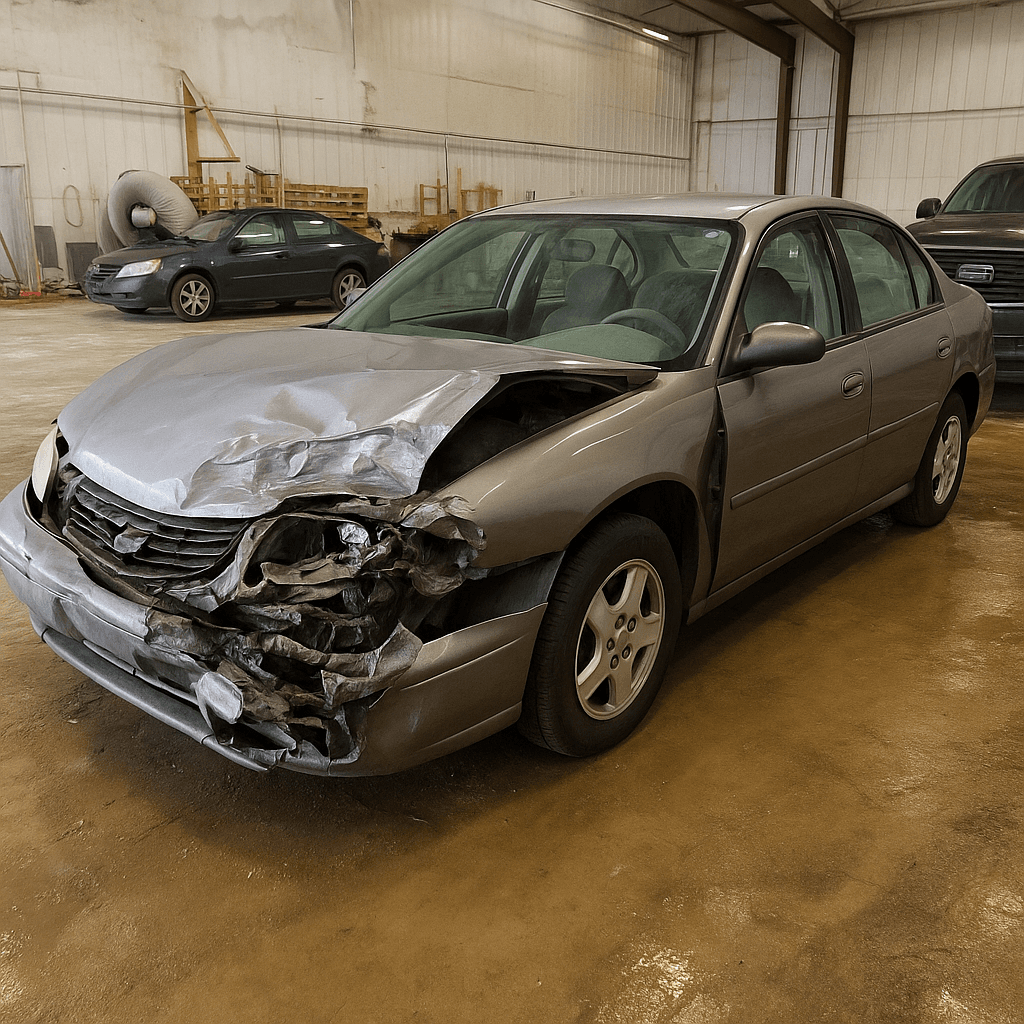
After a covered total loss, your insurer pays actual cash value: the vehicle's market value at the time of loss, not what you paid originally or what replacement would cost new. For a vehicle eight to twelve years old, actual cash value typically sits well below original purchase price. The coverage-fit question is whether the annual premium for collision and comprehensive justifies that depreciated payout.
Your deductible matters here. A $500 deductible on a vehicle worth $6,000 means the most the insurer would pay is $5,500 after a total loss. If collision and comprehensive together cost $650 annually, you recover your annual premium only if the vehicle is totaled within the policy year. Smaller claims below the deductible threshold produce no payout at all.
The blocker is informational: you lack your vehicle's current actual cash value and the isolated cost of collision and comprehensive coverage on your existing policy, making the tradeoff unresolvable without calling your carrier.
Getting the Numbers You Need
Call your carrier or log into your account portal and request the actual cash value they have on file for your vehicle. Some insurers list this figure in the policy declarations; most do not surface it unless you ask directly. The number reflects depreciation tables, regional market data, and your vehicle's condition as last reported. If the value seems inconsistent with local private-party listings, ask how it was derived and when it was last updated. You are entitled to understand the basis for any total-loss settlement before a claim occurs.
Request an itemized premium breakdown showing what you pay annually for collision coverage alone and comprehensive coverage alone, separate from liability and PIP. Many renewal notices present a single bundled figure. If your agent cannot provide the breakdown immediately, ask them to re-quote the policy with collision and comprehensive removed entirely so you can see the difference. That delta is the annual cost of keeping full coverage on a paid-off vehicle.
Related Articles




The Replacement Threshold
A common rule of thumb: if annual collision and comprehensive premiums exceed ten percent of the vehicle's actual cash value, the coverage costs more than it protects in most scenarios. For a vehicle valued at $5,000, that threshold sits at $500 per year. If your combined premium runs $650, you are paying $150 above the threshold annually to insure an asset that depreciates further each year.
This is a judgment call, not a mandate. Some retirees keep full coverage on paid-off vehicles because they lack liquid savings to replace the car after a total loss, making the predictable premium easier to budget than an unpredictable $5,000 outlay. Others drop collision and comprehensive because they drive infrequently, park in a secured garage, and would rather bank the annual premium toward future vehicle replacement. Neither choice is wrong; the threshold simply names the point where premium cost approaches asset value.
St. Petersburg's coastal location introduces hurricane and flooding risk. Comprehensive coverage pays for weather-related damage, and flood damage is excluded from collision. If your vehicle is garaged near a flood zone or you lack alternative transportation after a weather event, comprehensive alone may justify its cost even if collision does not. Many carriers allow you to drop collision while maintaining comprehensive, reducing premium while preserving storm protection.
Premium-to-Value Judgment Threshold
10%
A conventional threshold: when annual collision and comprehensive premiums exceed ten percent of actual cash value, coverage cost approaches the asset's depreciated worth. A $5,000 vehicle hitting a $500 annual premium crosses that line.
The Low-Mileage Factor
You drive 4,000 to 5,000 miles annually now that the commute is gone. Lower mileage reduces collision risk exposure, but most carriers do not automatically adjust your premium to reflect it unless you report the change or enroll in a mileage-verification program. Florida law requires insurers to offer a mature-driver discount, but mileage-based pricing is voluntary and carrier-specific.
Ask your current carrier whether they offer a low-mileage discount and what documentation or verification they require. Some accept an annual odometer photo; others require enrollment in a telematics program that tracks mileage electronically. If your carrier does not offer mileage-based pricing, other carriers writing in Florida do. Progressive, Geico, Nationwide, and Allstate all operate usage-based or low-mileage programs, and all write standard policies in Florida. Switching carriers to access mileage pricing can reduce your total premium more than dropping collision alone, depending on your current rate.
What Happens When You Drop Coverage
Removing collision and comprehensive mid-term triggers a premium refund for the unused portion of the policy period. Your carrier recalculates the premium based on the new coverage structure and returns the difference, typically within two billing cycles. The liability and PIP portions remain unchanged. You can reinstate collision and comprehensive at any renewal or mid-term by calling your agent, though the carrier may require a vehicle inspection if coverage has lapsed for more than 30 days.
Once you drop collision, any at-fault accident leaves you responsible for repairing or replacing your own vehicle regardless of cost. Comprehensive lapses mean you carry the full cost of theft, vandalism, or weather damage. If your household budget can absorb a $5,000 to $7,000 unplanned vehicle replacement without financial distress, dropping coverage makes the annual premium available for other priorities. If that outlay would create hardship, keeping coverage at a reduced deductible may be the better fit even on a paid-off car.
Compare Before You Decide
Get quotes from at least three carriers writing in Florida that offer mature-driver and low-mileage discounts before making the coverage decision. State Farm, Geico, Progressive, Allstate, and Nationwide all write standard policies in St. Petersburg and all file mature-driver discount programs with the state. Request quotes with full coverage at your current deductible, liability-only, and liability plus comprehensive without collision. The comparison shows you what each configuration costs and whether switching carriers changes the math enough to keep full coverage affordable.
Bring your current declarations page, your vehicle's actual cash value as stated by your insurer, your annual mileage, and confirmation that you completed a state-approved defensive driving course if applicable. Florida requires insurers to offer a mature-driver discount, but the percentage is set by each carrier's filed rates, not fixed by statute. Ask each quoted carrier what discount they apply and whether course completion increases it. The quotes you receive reflect your specific profile; premiums vary by ZIP code, vehicle, and driving history even within St. Petersburg.