
The Decision You Face After Payoff
You made the last payment, the title arrived, and your renewal notice shows collision and comprehensive premiums unchanged. You drive a tenth of your working-year mileage, park in your garage most days, and wonder whether paying for coverage that repairs or replaces a car you already own outright still makes financial sense. This is the coverage-fit question most retirees face within a year of payoff, and the answer is not the same for every driver.
The friction is positional. Collision and comprehensive exist to protect lenders during the loan term and your ability to replace the vehicle after a total loss. Once the loan closes and your annual mileage drops by two-thirds, the math changes. The question is whether your car's replacement cost, your liquid assets, and your risk tolerance justify continuing to pay premiums that will compound over the years you intend to keep driving.
Compare rates from carriers that specialize in senior drivers
Mature driver discounts, low-mileage rates, and coverage reviews — see what you're actually eligible for.
Get Your Free QuoteFlorida Property Damage Minimum
$10,000
Florida requires $10,000 property damage liability and $10,000 PIP, but zero bodily injury liability for in-state drivers. Collision and comprehensive are optional once the lender releases the title, but liability limits protect your retirement assets in an at-fault accident.
Florida auto_insurance_state_data
What Full Coverage Actually Pays For
Full coverage is shorthand for a policy carrying collision, comprehensive, and liability together. Collision pays to repair or replace your car after an accident you cause or a hit involving another vehicle. Comprehensive covers theft, vandalism, weather damage, animal strikes, and other non-collision losses. Liability pays the other driver's bills and property damage when you are at fault. Once your loan closes, the lender's interest disappears and you control whether collision and comprehensive stay on the policy.
Florida is a no-fault state, which means your PIP pays your medical bills after an accident regardless of fault, up to the $10,000 limit. Collision and comprehensive have nothing to do with PIP. They exist solely to repair or replace your vehicle. If you drop them, you keep liability and PIP, and you self-insure the vehicle's physical damage risk. The coverage you drop determines what you pay out-of-pocket after a loss.
Medicare covers many accident-related medical costs for enrollees, which reduces PIP's value for retirees. Medical payments coverage duplicates Medicare and PIP in most scenarios, so retirees often drop med-pay to reduce premium without losing meaningful protection. Collision and comprehensive operate independently: they pay for your car, not your medical bills.
The blocker is informational: you lack a replacement-cost threshold that tells you when collision and comprehensive stop earning their premium over the years you plan to drive.
Replacement Cost and Premium Payback
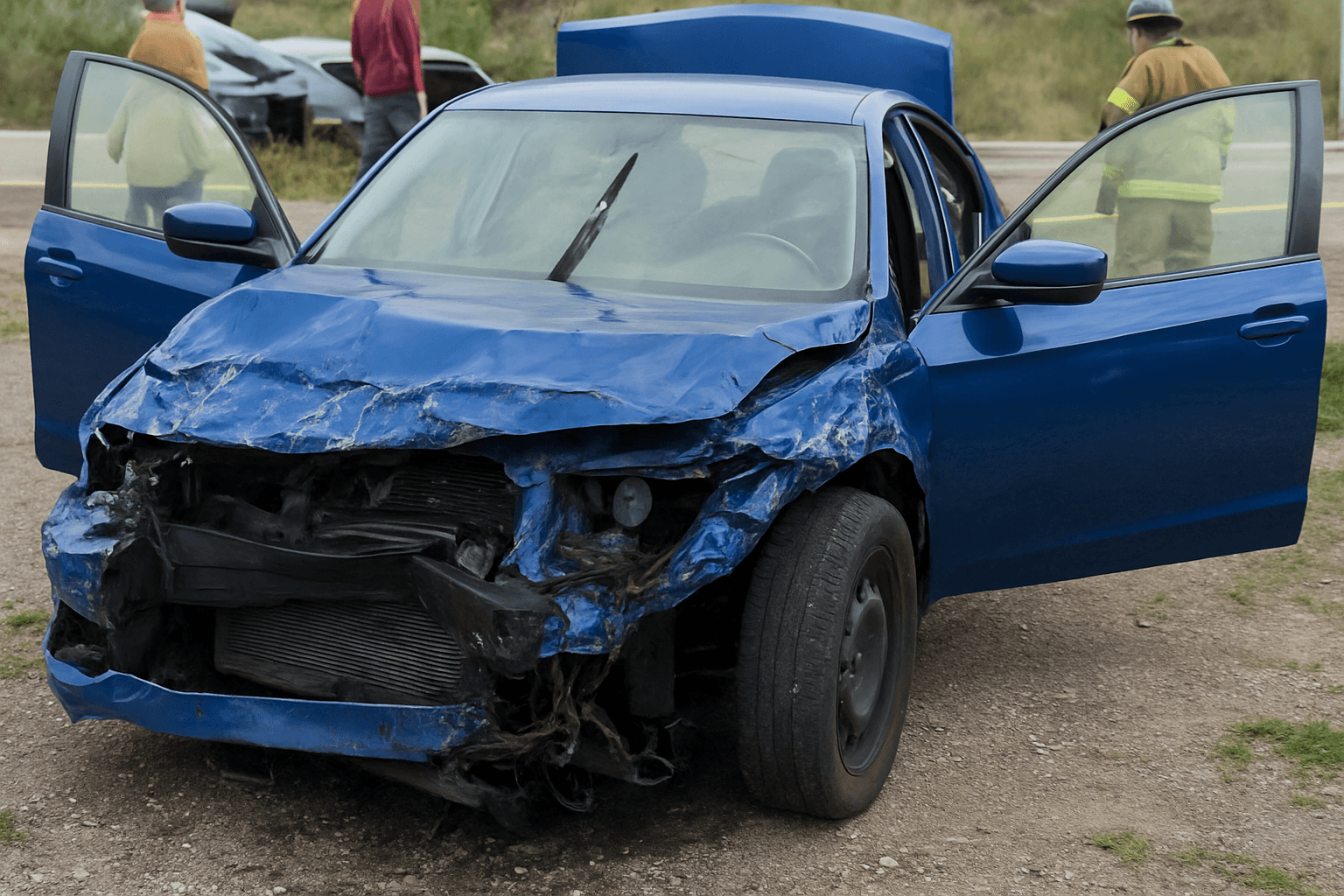
Start with your car's actual cash value: the amount your insurer would pay after a total loss, minus your deductible. Check recent private-party listings for your year, make, model, and mileage to estimate this figure. If your car is worth $8,000 and your collision-plus-comprehensive premium runs $600 annually, you will pay the car's value in premiums over roughly 13 years. If you plan to drive another 5 years, you pay $3,000 in premiums to insure against an $8,000 loss. The question is whether that $3,000 is better spent as insurance or held as self-insurance in your savings.
If your liquid assets can absorb a total loss without financial hardship, dropping collision and comprehensive and banking the premium makes sense. If losing $8,000 would force you to finance a replacement or go without a car, keeping coverage protects your mobility. The judgment call is yours, not your insurer's. Carriers do not care whether you keep coverage after payoff; the decision is purely about your balance sheet and risk tolerance.
Related Articles



When Liability-Only Makes Sense
Liability-only policies drop collision and comprehensive and keep liability coverage at limits high enough to protect your assets. Florida's $10,000 property damage minimum is far too low for retirees with home equity, retirement accounts, or other assets an at-fault accident judgment could reach. Raising liability to 100/300/100 or higher shields those assets and costs a fraction of what collision and comprehensive run annually.
Drivers with cars valued under $5,000 and sufficient savings to replace the vehicle outright typically benefit from dropping physical damage coverage and raising liability limits with the premium savings. Drivers with cars valued above $12,000 and limited liquid reserves typically keep collision and comprehensive to avoid financing a replacement after a total loss. The threshold is personal, not universal.
One failure mode: dropping collision and comprehensive midterm without adjusting liability limits. Your premium drops, but your asset exposure increases if you stay at state minimums. The correct sequence is to raise liability first, then drop physical damage coverage at renewal. Adjust both in the same action to avoid a gap where you are underinsured in the coverage that actually protects your wealth.
How Low Mileage Changes the Math
Retirees driving under 8,000 miles annually face lower accident exposure than drivers commuting 15,000 miles a year, but collision and comprehensive premiums rarely reflect that drop unless you enroll in a low-mileage or usage-based program. Geico, Progressive, State Farm, and Nationwide offer programs in Florida that reduce premiums when your actual mileage falls below a threshold, typically verified by odometer photo or telematics device.
If you keep collision and comprehensive, enrolling in a mileage program captures savings without dropping coverage. If you are borderline on the full-coverage decision, a 10-15% mileage discount may tip the math toward keeping coverage for another few years. Ask your carrier whether they offer mileage-based pricing and what the enrollment process requires. Most programs allow monthly or annual odometer submission rather than requiring continuous device monitoring.
The mileage discount applies to your total premium, including collision and comprehensive, so the savings compound if you keep physical damage coverage. Carriers do not advertise these programs heavily; you must ask. If your carrier does not offer one, shop quotes from Geico, Progressive, and State Farm explicitly requesting their low-mileage program rates for your current coverage structure.
Carriers Writing Florida Policies
25
Twenty-five carriers write auto policies in Florida, including standard-market carriers like State Farm, Geico, and Progressive, and specialty carriers serving non-standard profiles. Not all offer mature-driver or low-mileage discounts, and not all quote online. Comparing at least three carriers' full-coverage and liability-only quotes shows the real cost difference.
auto_insurance_carriers_by_state
Comparing Carriers for Your Coverage Decision
The coverage decision and the carrier decision are intertwined. One carrier's collision and comprehensive premium may exceed another carrier's liability-only rate by enough to justify keeping coverage at the lower-cost carrier. Pull quotes for both full coverage and liability-only from at least three carriers writing in Florida. Compare the annual premium difference against your car's replacement cost to see how many years of premium equal the insured value.
State Farm, Geico, Allstate, Progressive, and Nationwide write standard-market policies in Florida and offer online quoting for both coverage structures. If you completed a state-approved defensive driving course, ask each carrier to apply the mature-driver discount when quoting. Florida law requires insurers to offer this discount, but the amount is set by each carrier's filed rates, and you must request it. Enrollment in a low-mileage program stacks with the mature-driver discount at most carriers, compounding the savings.
Making the Decision and Moving Forward
This decision is not permanent. You can drop collision and comprehensive at one renewal, then add them back later if your situation changes, though your rate may differ based on your age and the car's depreciation. Review the decision annually as your car ages, your mileage changes, and your savings grow or contract. What makes sense this year may not next year, and vice versa.
If you decide to keep full coverage, enroll in a mileage-based program and confirm your mature-driver discount is applied. If you decide to drop collision and comprehensive, raise your liability limits first to protect your retirement assets, then remove physical damage coverage at the same renewal to avoid any gap. If you are unsure, pull quotes for both structures from three carriers and compare the annual cost difference against your car's current value and your comfort with self-insuring that amount. The right answer is the one that aligns your premium spend with your financial position and lets you drive with confidence that you are neither over-insured nor underprotected.